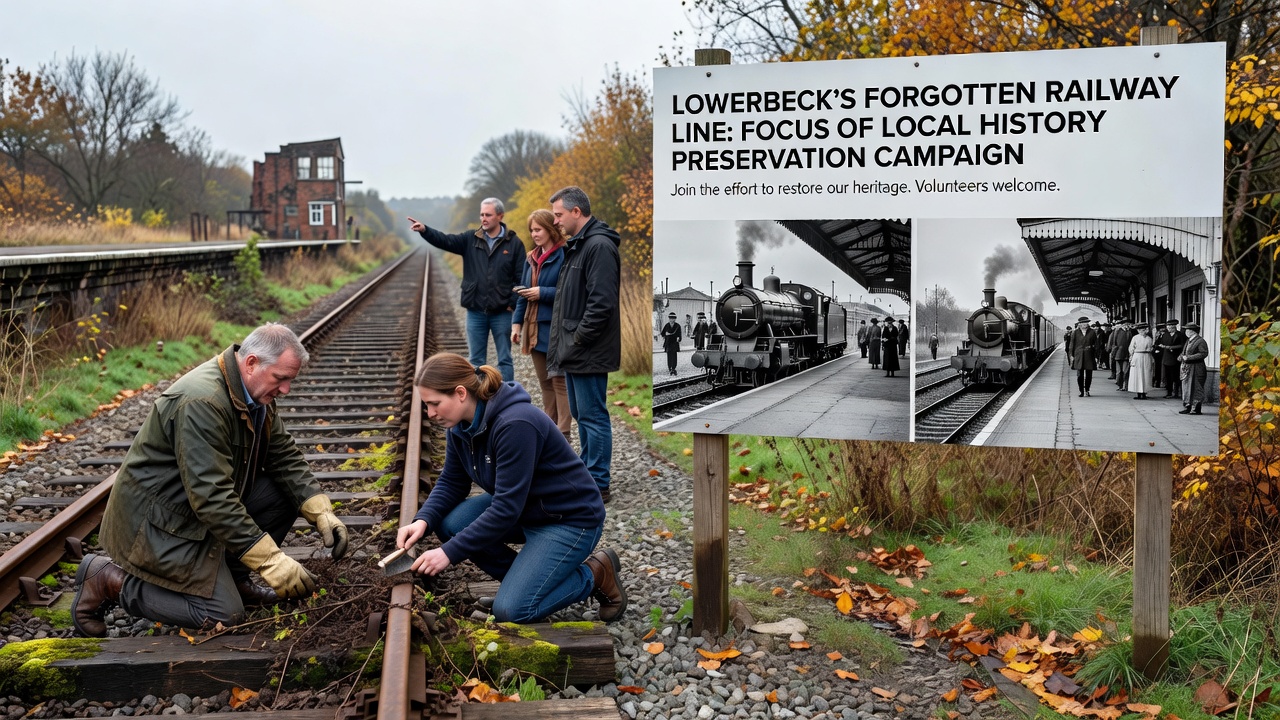
David Jenkins · 29 September 2026
Campaign Emerges to Safeguard Lowerbeck's Neglected Railway Legacy
Lowerbeck's disused railway line once connected the village to regional networks during the late nineteenth century and carried both freight and passengers until services ended in the 1960s; today the corridor runs through fields and woodland yet retains visible cuttings, bridges and station platforms that local groups now seek to document and protect. The preservation campaign gained momentum after residents formed the Lowerbeck Heritage Railway Project in early 2025, and organisers report steady growth in volunteer numbers alongside requests for guided walks and archive research sessions.
Historical Background of the Line
Construction of the branch began in 1887 under the Midland Railway Company, and the route opened for traffic in 1892 with stops at Lowerbeck Halt plus two intermediate sidings that served local quarries and farms; passenger numbers peaked in the 1920s before declining after World War II, and the final scheduled train departed in October 1964 as part of wider network rationalisation. Archival records held at county repositories show that the line transported limestone, timber and agricultural produce, while timetables from that era list four daily services each way during summer months.
After closure the trackbed remained largely intact because adjacent landowners continued limited use for access tracks; over decades vegetation reclaimed much of the alignment, although several stone overbridges and a cast-iron viaduct still stand and carry local footpaths. Surveys conducted by the project volunteers in 2025 mapped remaining infrastructure and confirmed that drainage channels and embankment profiles have survived with minimal alteration since the last trains ran.
Launch of the Current Preservation Effort
Residents first discussed formal protection measures during a village hall meeting in March 2025, and the resulting group registered as a community interest company later that year; its stated aims include securing legal listing for key structures, creating an oral-history archive and preparing a heritage trail that could link the former station site with the village centre. Project leaders have collected more than two hundred photographs and twenty hours of recorded interviews from former railway workers and their families, and these materials now form the core of a digital collection hosted on the village website.
Funding has come from small grants issued by regional heritage bodies together with private donations, while technical advice has been provided by engineers experienced in Victorian railway structures. The campaign has also contacted the Railway Heritage Trust, a UK organisation that supports preservation of historic rail infrastructure, for guidance on listing applications.
Activities Planned Through 2026
Volunteers intend to complete a full condition survey of the remaining bridges by spring 2026, and they have scheduled a public open day for September 2026 that will feature a short heritage walk along the safest sections of the trackbed plus an exhibition of archive material in the village hall. Schools in the area have been invited to participate in a junior-research programme that will encourage pupils to investigate how teh railway influenced local trade patterns during its operational decades.
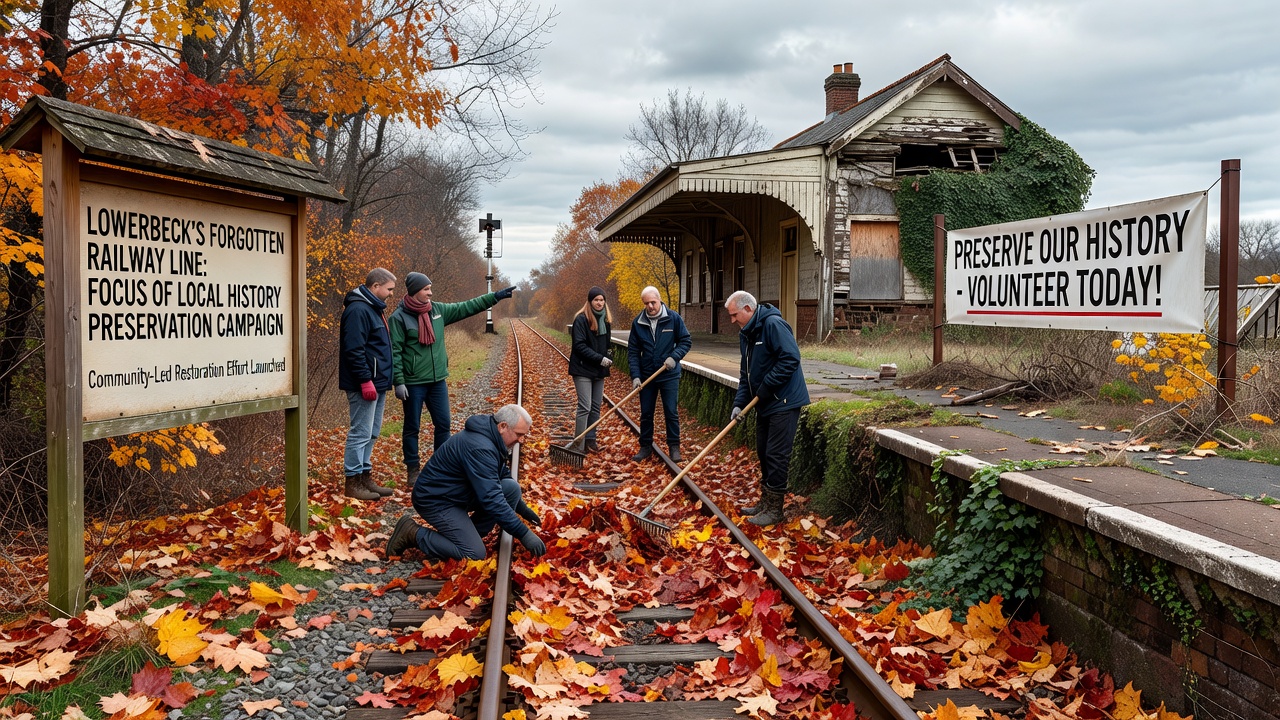
Additional events under discussion include evening lectures by transport historians and practical sessions on vegetation management that follow guidelines issued by the UK Department for Transport heritage unit. Organisers emphasise that all access arrangements remain subject to landowner consent and that safety assessments will determine which stretches of the corridor can be opened to visitors.
Challenges and Next Steps
Ownership of different segments of the trackbed is fragmented among several private estates and the parish council, so negotiations over access agreements and maintenance responsibilities continue. Some sections cross working farmland, and campaign members have stressed that any future trail must avoid disruption to agricultural operations. Technical assessments have identified minor structural concerns at two overbridges, yet initial reports indicate that repairs would be modest in scale compared with similar projects elsewhere in the region.
Project coordinators have submitted an initial expression of interest to the National Heritage Lottery Fund for a larger grant that could support interpretation panels and improved footpath surfacing. Meanwhile the group continues to expand its volunteer database and to share findings through monthly updates posted on the village noticeboard and online channels.
Conclusion
The Lowerbeck railway preservation campaign demonstrates how communities can draw on surviving physical remnants and personal memories to record transport history that might otherwise fade from view. As mapping work progresses and the September 2026 open day approaches, the project provides a concrete example of local initiative focused on documentation, protection and measured public access rather than wholesale restoration. Continued cooperation among residents, landowners and heritage advisers will determine how much of the corridor can be secured for future generations to study and appreciate.