Lars Hansen · 27 October 2026
Community Volunteers Begin Systematic Bat Population Survey Across Lowerbeck's Disused Barns
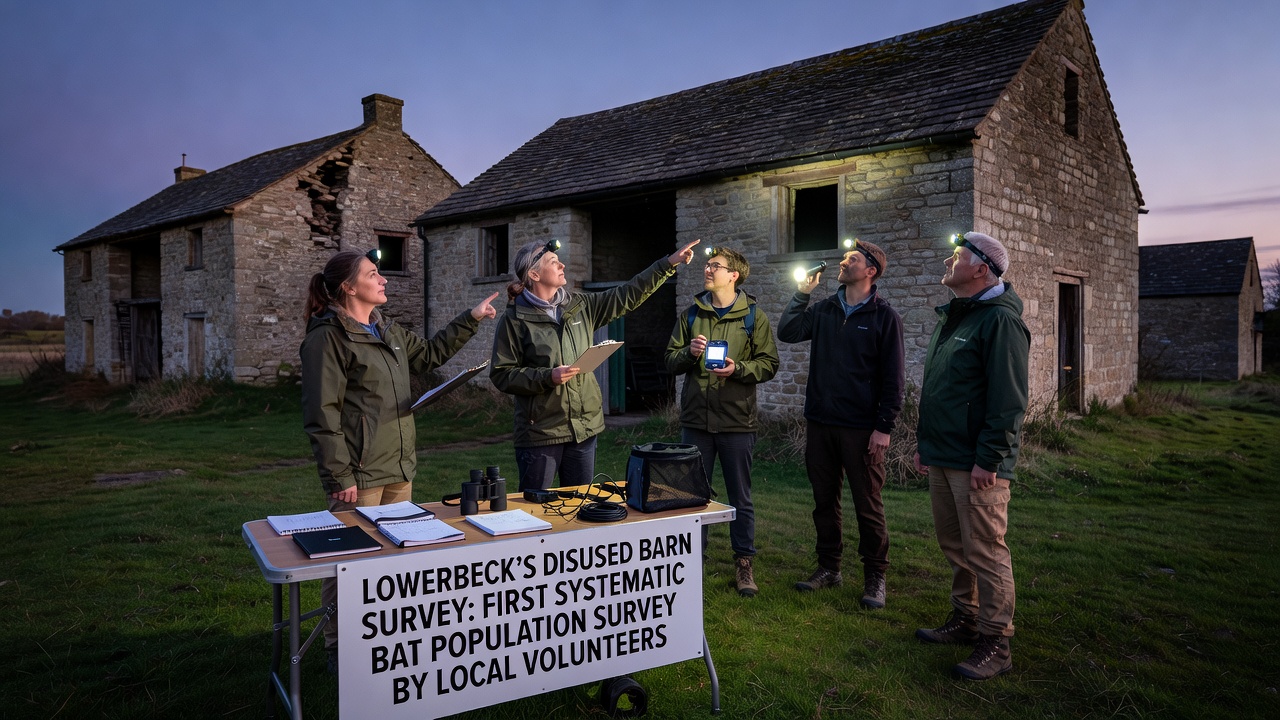
Lowerbeck residents have launched the area's first systematic bat population survey, focusing on several disused barns scattered throughout the village and surrounding countryside, with fieldwork scheduled to begin in October 2026. The initiative brings together trained volunteers who will use acoustic detectors, emergence counts, and roost inspections to gather baseline data on species presence and activity levels.
Barns in this region often feature open rafters, gaps in stonework, and sheltered interiors that provide suitable conditions for roosting bats, and observers note these structures have received little prior attention from formal monitoring programs. Data collection will follow standardized protocols developed by national conservation bodies, ensuring results can contribute to wider regional assessments.
Survey Methods and Timeline
Volunteers will conduct dusk emergence watches at multiple sites, deploy static acoustic recorders for consecutive nights, and perform internal inspections where safe access exists, while October 2026 marks the start because cooler temperatures encourage bats to use these barns as transitional roosts before winter hibernation. Equipment includes calibrated bat detectors that capture echolocation calls for later species identification through software analysis, and teams will record environmental variables such as temperature, humidity, and surrounding habitat features at each location.
Training sessions held earlier in the year covered safety procedures, licensing requirements under current wildlife legislation, and data recording standards, and participants include individuals with backgrounds in natural history recording plus newcomers who completed online modules offered by established conservation networks. The project spans six months initially, with repeat visits planned to capture seasonal variations in bat activity.
Role of Local Volunteers
Local people have coordinated the effort through the Lowerbeck Wildlife Group, securing permissions from landowners and arranging equipment loans from regional biodiversity partnerships. Each volunteer pair receives responsibility for one or two barns, allowing consistent coverage across the survey area without overburdening any single team. Records will feed into a central database that tracks numbers, species composition, and evidence of breeding or hibernation activity.
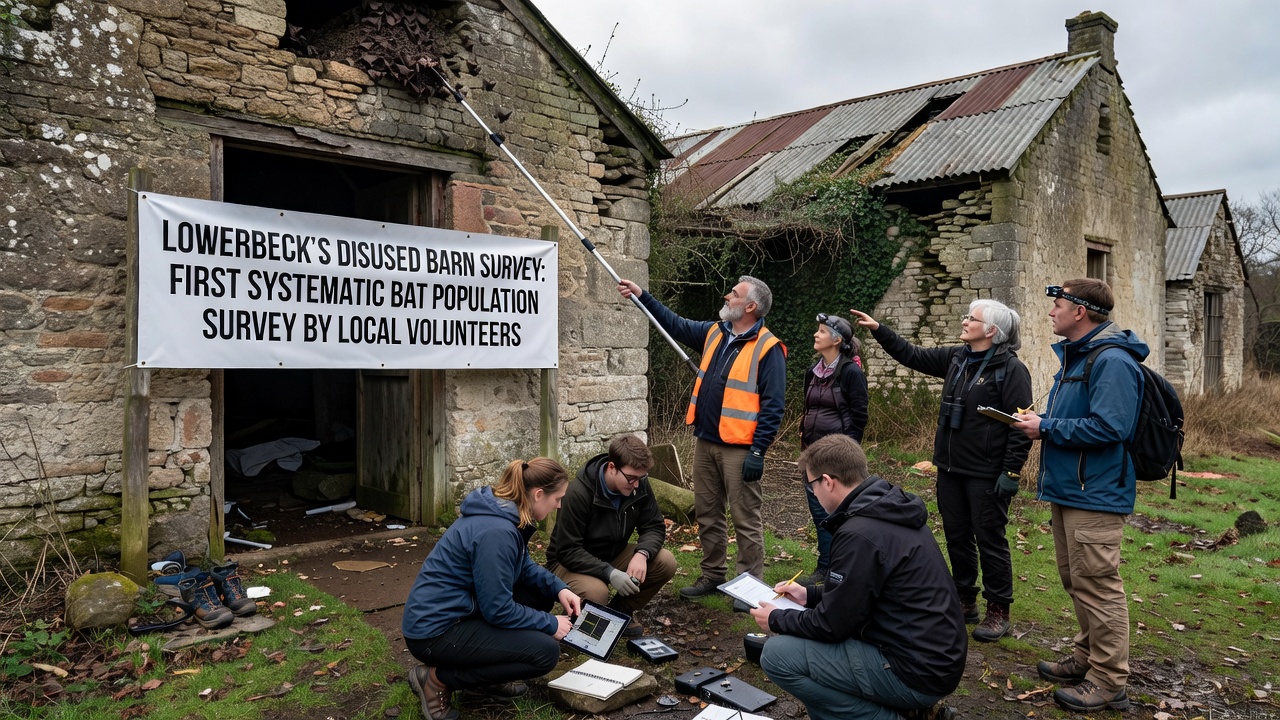
One team that visited a barn near the old mill reported finding droppings consistent with pipistrelle species on previous informal checks, yet the current project marks the first attempt to quantify these observations across multiple sites simultaneously. Regular meetings allow volunteers to compare notes on techniques and troubleshoot issues such as equipment battery life or interference from farm machinery.
Ecological Context for Bats in Disused Structures
Disused agricultural buildings frequently support maternity colonies during summer months because they offer stable microclimates and protection from predators, and researchers from the University of Bristol have documented similar patterns in comparable rural settings across southwest England. The survey will help determine whether Lowerbeck barns serve mainly as night roosts, maternity sites, or hibernation locations, information that can guide future management decisions by landowners.
According to guidance from the Bat Conservation Trust, systematic counts provide essential evidence for assessing population trends at local scales, and the Lowerbeck project aligns with that recommendation by establishing repeatable methods from the outset. Habitat connectivity also matters, since bats rely on linear features such as hedgerows and watercourses to commute between roosts and foraging areas, and the survey includes mapping these features around each barn.
Data Sharing and Next Steps
Results will be shared with the local records centre and national bat monitoring schemes, allowing comparisons with other UK sites and contributing to broader understanding of how bats use traditional farm buildings. Volunteers plan to produce an interim report after the first field season, highlighting any barns that show particularly high activity and may benefit from targeted conservation measures such as improved access points or reduced disturbance.
Additional surveys in subsequent years could expand coverage to include nearby woodland and church buildings, building on the foundation established this autumn. Coordination with nearby parishes has already begun, and several groups have expressed interest in adopting similar approaches.
Conclusion
The Lowerbeck bat survey represents a coordinated community response to the need for baseline ecological data, using established scientific methods applied by trained local volunteers. Through consistent monitoring that begins in October 2026, the project will generate records that support both village-level conservation planning and contributions to national datasets maintained by relevant authorities. Landowner cooperation and volunteer commitment have enabled the work to move forward, and ongoing data collection will clarify the importance of these disused barns for bat populations in the area.