David Jenkins · 13 October 2026
Lowerbeck Community Workshop Revives Heritage Apple Varieties Through Grafting Techniques
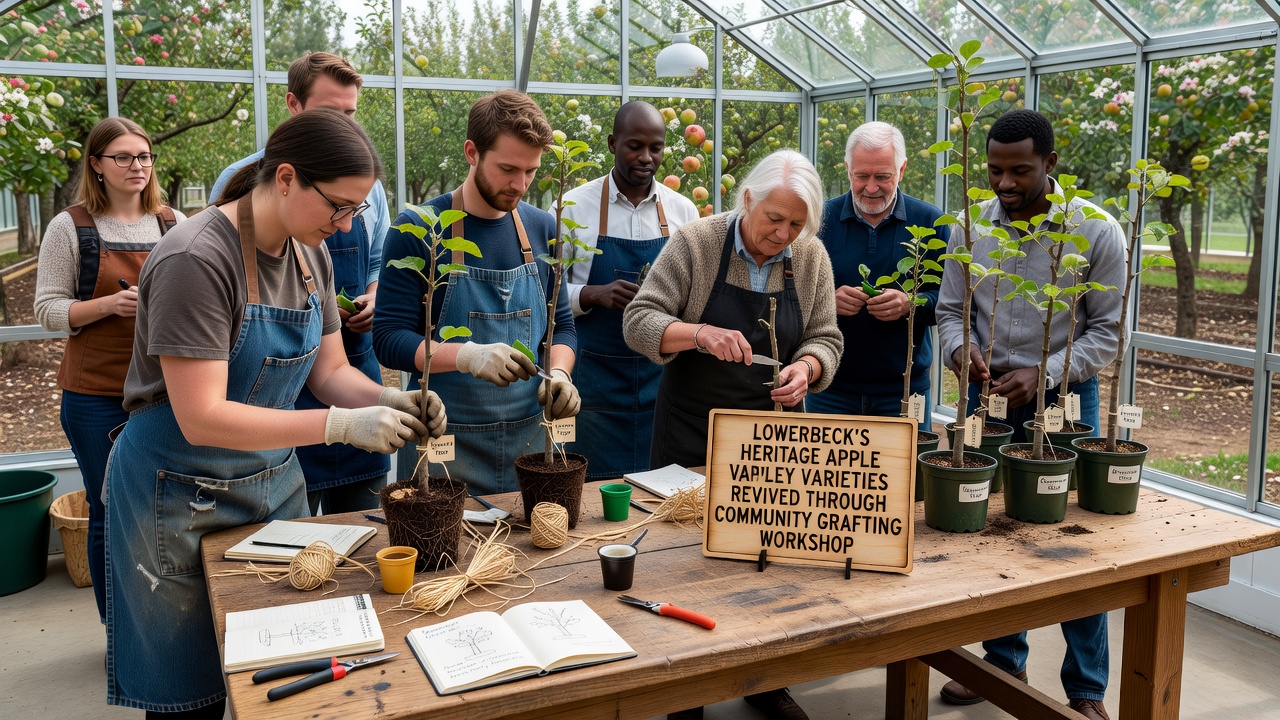
Lowerbeck's heritage apple varieties have drawn attention through a series of community grafting workshops that focus on preserving older cultivars once common in the region, and these events continue with sessions planned through October 2026.
Background on Local Apple Heritage
Heritage apple varieties in Lowerbeck trace back to 19th-century orchards where farmers selected trees for flavor, storage life, and resistance to local pests, while modern commercial production shifted toward a narrower range of varieties that prioritize uniformity and shipping durability. Data from orchard surveys shows that many traditional types, including those with names like Lowerbeck Pippin and Russet Dawn, declined as larger estates replanted with standardized stock, yet small plots retained scattered examples of the older trees.
Researchers at horticultural institutions note that grafting serves as the primary method for reproducing these varieties because apple trees do not grow true from seed, and this technique allows propagation of exact genetic material from mature specimens. Community organizers in Lowerbeck began coordinating workshops after local residents identified several aging trees on private land that still produced the distinctive fruit, and participants learn to collect scion wood in winter before attaching it to compatible rootstocks during the dormant season.
Workshop Structure and Participation
Sessions typically run over two days and combine classroom instruction with hands-on practice, where attendees first examine examples of successful grafts before attempting their own cuts with sterilized knives and grafting tape. Attendance records indicate steady growth in participation, with groups including both longtime residents who recall childhood orchards and newer arrivals interested in sustainable food production, and the October 2026 schedule adds evening classes to accommodate working schedules.
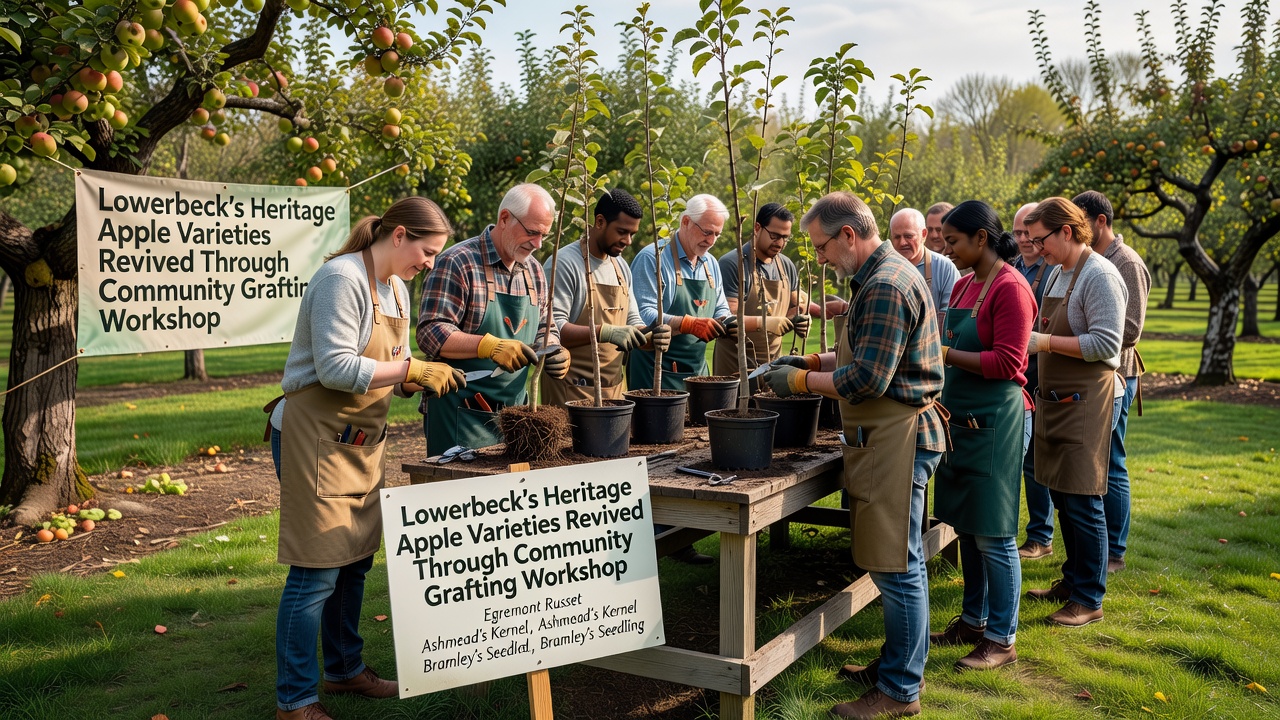
Materials supplied during the events include rootstocks sourced from certified nurseries that match soil conditions found around Lowerbeck, while instructors demonstrate whip-and-tongue grafts alongside chip budding methods suited to different tree ages. One study from a European agricultural network found that community-led grafting programs increased the survival rate of heritage scions by 30 percent compared with individual attempts, largely because shared knowledge reduces common errors such as poor alignment or inadequate sealing.
Outcomes and Ongoing Projects
After the initial workshops concluded, participants established a small nursery site on village common land where grafted saplings receive ongoing care until they reach planting size, and several of these young trees have already been distributed to local schools and community gardens. Records kept by the organizing committee document that over 150 successful grafts from eight heritage varieties were completed in the most recent cycle, with follow-up visits scheduled to monitor growth and fruiting characteristics.
Links to broader preservation efforts appear through connections with national collections that catalog older cultivars, and one such resource comes from the Royal Horticultural Society apple collection which maintains records of varieties grown across the United Kingdom. Another reference point involves work at the Australian Department of Agriculture fruit variety trials, where parallel grafting projects track performance under different climates and provide comparative data on disease resistance traits.
Community Impact and Future Steps
Local records show that grafted heritage trees planted in previous years now contribute to annual fruit harvests shared at village events, and these gatherings also serve as opportunities to collect further scion wood from any trees that demonstrate strong local adaptation. Observers note that the workshops have sparked interest in related skills such as pruning and pest monitoring, leading to informal study groups that meet monthly to discuss seasonal orchard management.
Plans for the October 2026 sessions include expanded demonstrations on identifying rootstock compatibility and labeling systems that track each variety's origin, while organizers continue to seek additional land for larger nursery beds. Figures from similar programs in other regions indicate that sustained community involvement often results in the reintroduction of multiple heritage types to local markets within five to seven years, provided consistent follow-up care occurs.
Conclusion
The grafting workshops in Lowerbeck have produced measurable results in the form of documented successful grafts and distributed saplings, and these activities connect local efforts to wider networks that maintain records of older apple varieties. Continued sessions through October 2026 will add to the existing collection while building skills among residents who participate in the preservation process.